I got the chance to see Ryan Coogler’s Sinners (2025) the day before it premiered at my hometown IMAX. The energy in the theater was wild; every seat was filled with anticipation swirling through the cramped theater, and someone in front of me was so drunk they could barely stay upright, which somehow made the whole thing feel even more thematic.
The film itself? Spellbinding. It’s the first time I’ve seen Coogler lean this deeply into a world of creative freedom, depicting Black American South: the music, the spirituality, the slow heat of it all. The accuracy in Southern vernacular; the tension between the Black church and the blues, and the use of Hoodoo (not Voodoo) as a living, breathing tradition pulled me right in.
Watching Sinners sent me spiraling into a full-on Southern Gothic revival. I started revisiting films and books that explore that same haunted, beautiful tension — stories rooted in the South’s ghosts, both literal and historical. So much of my creative lens is Afrocentric, and this genre hits a nerve because it doesn’t romanticize the South; it interrogates it, challenging American history in its wake.
Southern Gothic, at its core, is about stripping away the myth of “The Good Ole’ South.” It’s about confronting the ugliness that hides behind charm and hospitality: the sin under the Sunday best. It’s a space where faith, violence, race, and class all crash into each other, often in the most poetic, unsettling ways.
So, inspired by Sinners and my own Southern obsessions, I pulled together a list of five films that capture that essence — stories of sin, secrets, and survival. These are the films that live in the shadows of magnolia trees, where beauty and decay share the same air.
The Night of the Hunter (1955) dir. Charles Laughton
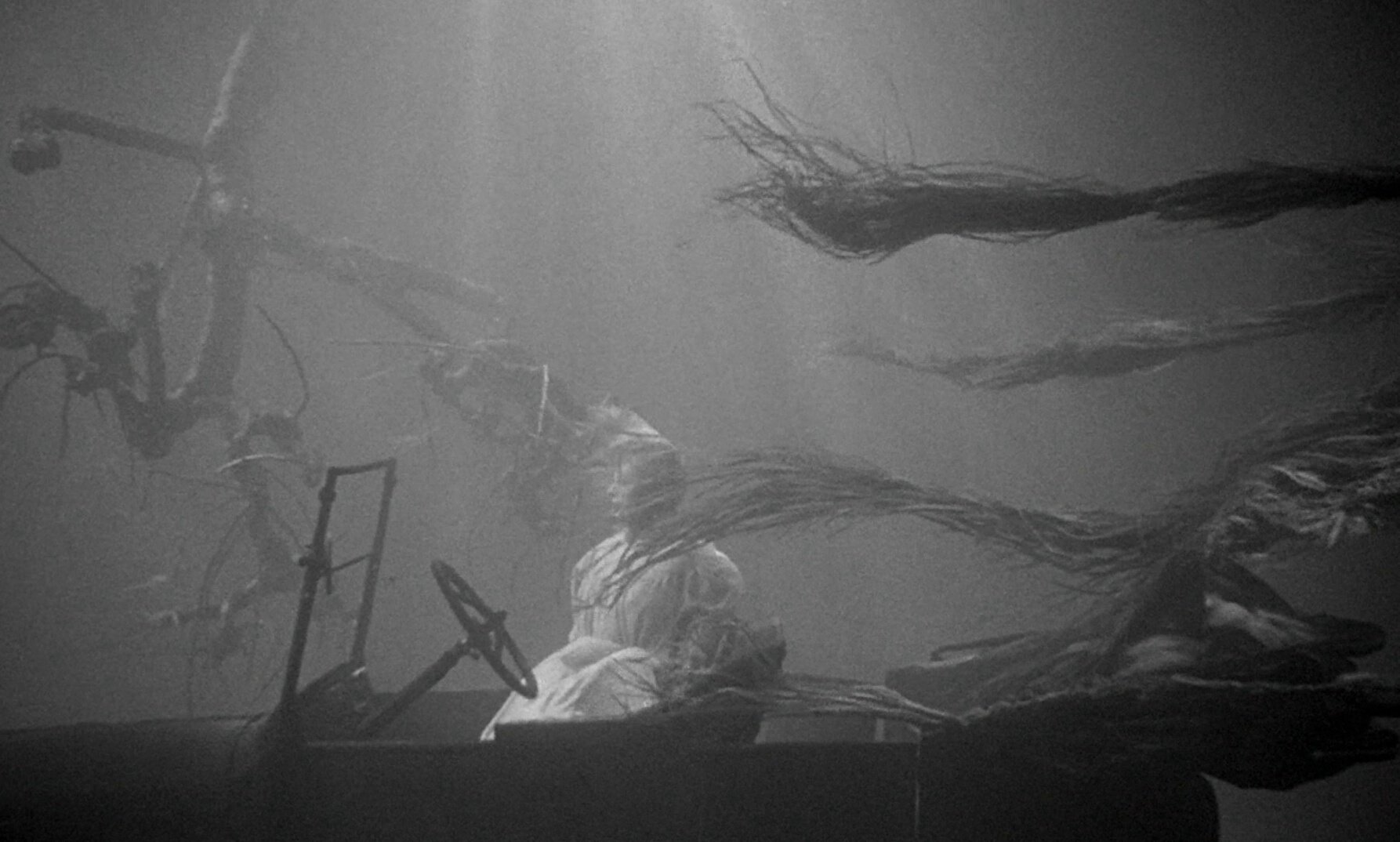
You can’t begin talking about Southern Gothic cinema without mentioning Laughton’s cult classic. Based on Davis Grubb’s 1953 novel of the same name, The Night of the Hunter follows a sinister, scripture-spouting preacher hunting for the hidden money left behind by his late prison bunkmate. Set against the shadowy backdrop of a Depression-era South, it turns religion into a nightmare—a fable of innocence, greed, and faith’s corruption. The film was both Laughton’s first and last directorial effort, a box-office failure that critics at the time found too strange, too stylized, too detached from the novel’s emotional weight. But that strangeness is precisely what makes it unforgettable now.
My favorite moment is the iconic “LOVE” and “HATE” sermon, later echoed in Spike Lee’s Do the Right Thing (1989) through Radio Raheem’s brass knuckles. You can feel Laughton’s fingerprints in everything from The Rocky Horror Picture Show (1975) to The Elephant Man (1980) and even Hereditary (2018). The Night of the Hunter is an undeniably Lynchian nightmare; exquisitely shot, framed in stark expressionist lighting, chiaroscuro shadows swallowing innocence whole in its warning against false prophets.
Hush…Hush, Sweet Charlotte (1964) dir. Robert Aldrich
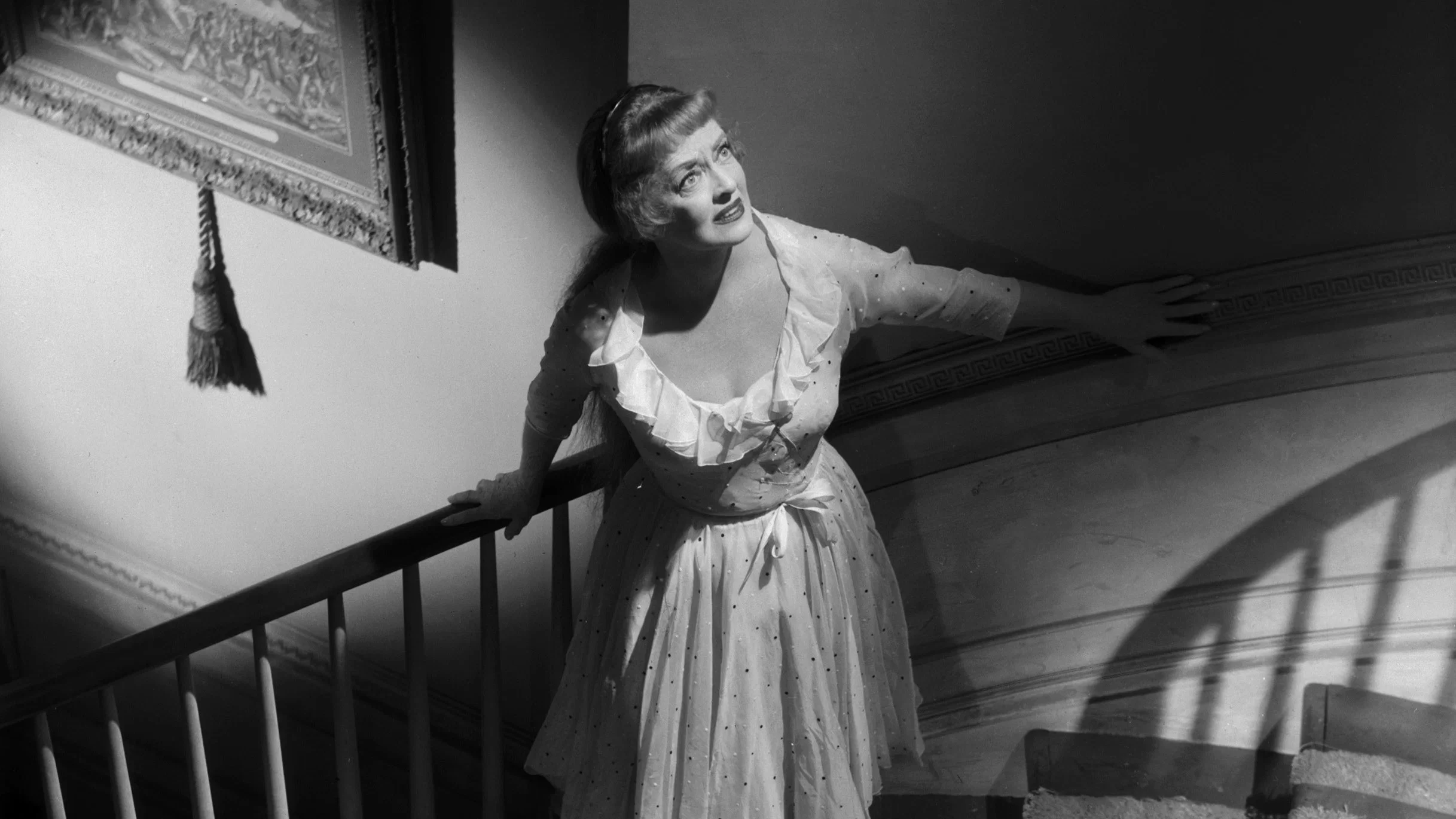
Everyone loves to bring up Bette Davis’s early career films like Jezebel (1938), Now, Voyager (1941), but my favorite era of her work is the horror streak she took on in the 1960s. This period could easily fall under the Grand Dame Guignol subgenre, which centers older women of faded aristocratic privilege who’ve fallen from grace and into madness. Davis’s signature red lipstick, haunting eyes, and theatrical ferocity made her the perfect face for this turn, with films like What Ever Happened to Baby Jane? (1962) and The Nanny (1965) redefining her as horror royalty.
Hush... Hush, Sweet Charlotte tells the story of Charlotte Hollis, a woman of the “Old South” trapped by memory, gossip, and decay. Still haunted by the grisly murder of her married lover decades earlier, she lives in her father’s crumbling antebellum mansion — a decaying monument to the South’s lost grandeur. When the Highway Commission threatens to tear it down, Charlotte begins to unravel, tormented by guilt, manipulation, and ghostly visions that may or may not be real. The first ten minutes alone — a severed hand, a blood-soaked dress — set the film’s grim, macabre tone, foreshadowing the psychological collapse to come.
What makes Charlotte so fascinating is how it uses the Gothic decay of the South as both setting and metaphor. The antebellum mansion isn’t just a house — it’s the corpse of a dying social order, clinging to its past even as it rots. And within it, Charlotte becomes both victim and symbol: a tragic woman punished by the ghosts of patriarchy, rumor, and the sins of old money. It’s a film that’s eerie, sad, and unexpectedly tender — the kind of horror that doesn’t just scare, but mourns.
Fried Green Tomatoes (1991) dir. Jon Avnet
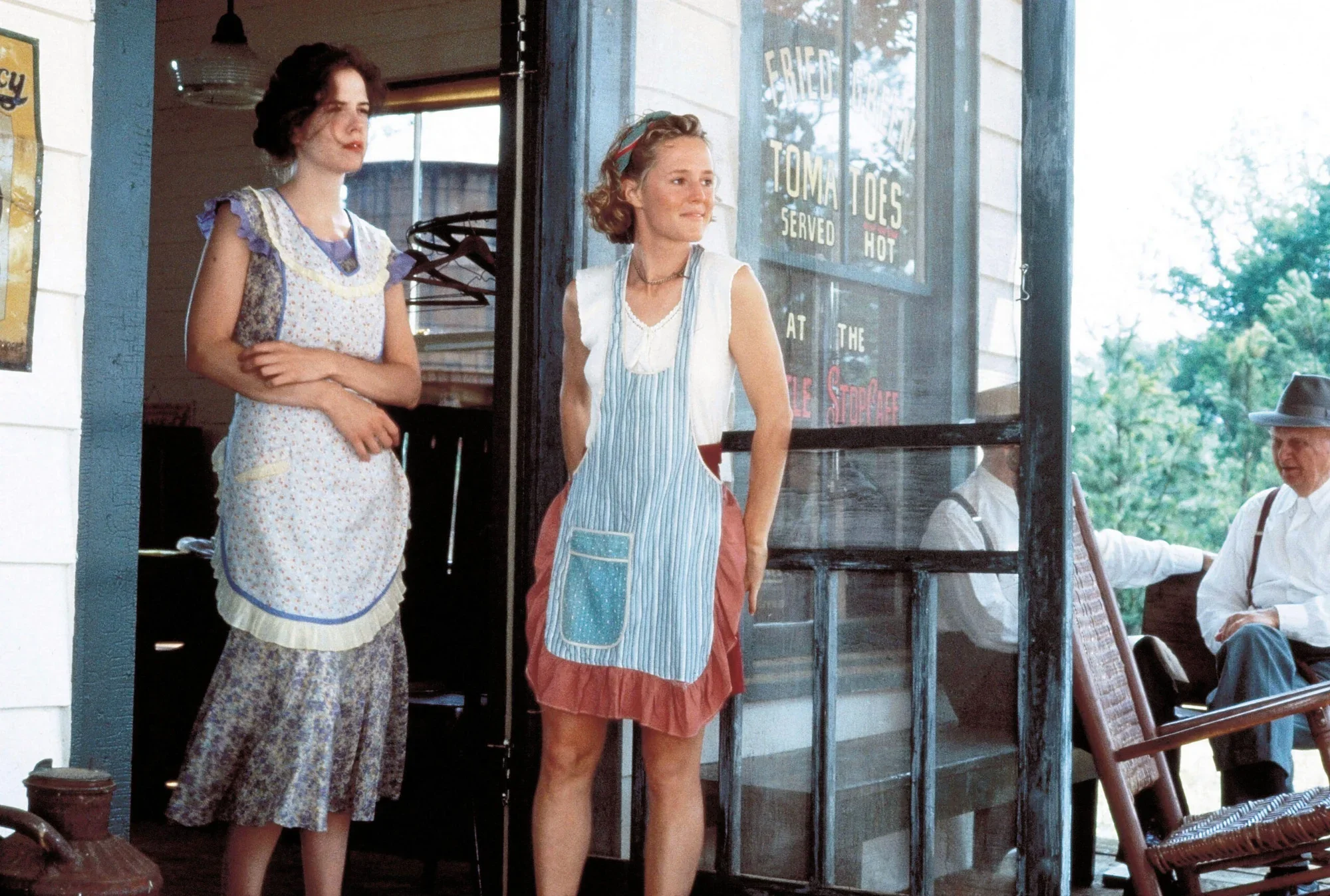
Fried Green Tomatoes might look, at first glance, like a lighthearted slice of small-town nostalgia, romanticizing Whistle Stop, Alabama. But as the story unfolds, the Southern Gothic elements of death, decay, and secrecy start to rise to the surface. Based on Fannie Flagg’s novel Fried Green Tomatoes at the Whistle Stop Café, the film follows Ninny Threadgoode’s recollections of the once lively town, piecing together a history filled with tragedy and transformation.
The film has long been praised for its feminist perspective on 1930s Southern womanhood, with many also reading it as a coded LGBTQ+ love story. While praised, the film is also equally criticized for its whitewashed portrayal of race relations, which I agree with. The film leans on the tired Hollywood trope of the “good Negro,” a character who is loyal, selfless, and conveniently non-confrontational. It’s as if the director wanted to depict racial harmony through friendship, yet what emerges instead feels one-sided, stripped of the social and systemic weight that defined Black life in the rural South. The story denies the real horrors of being Black in that time and place, turning its Black characters into comforting figures for white audiences rather than fully realized people navigating oppression.
Still, what Fried Green Tomatoes does capture beautifully is the Southern Gothic paradox of how loss and death can coexist with renewal. Whistle Stop is a ghost town by the time we arrive, telling a story of how its decay began through memories that transform pain into something resembling healing. Beneath its flaws, there’s a distinctly female voice driving the narrative, reclaiming the past through storytelling. It becomes a film about survival and reinvention, yet carries a warmth that feels personal and intimate. It centers on women who still have stories worth reclaiming, even in the pain and imperfection of the South.
Eve’s Bayou (1997) dir. Kasi Lemmons
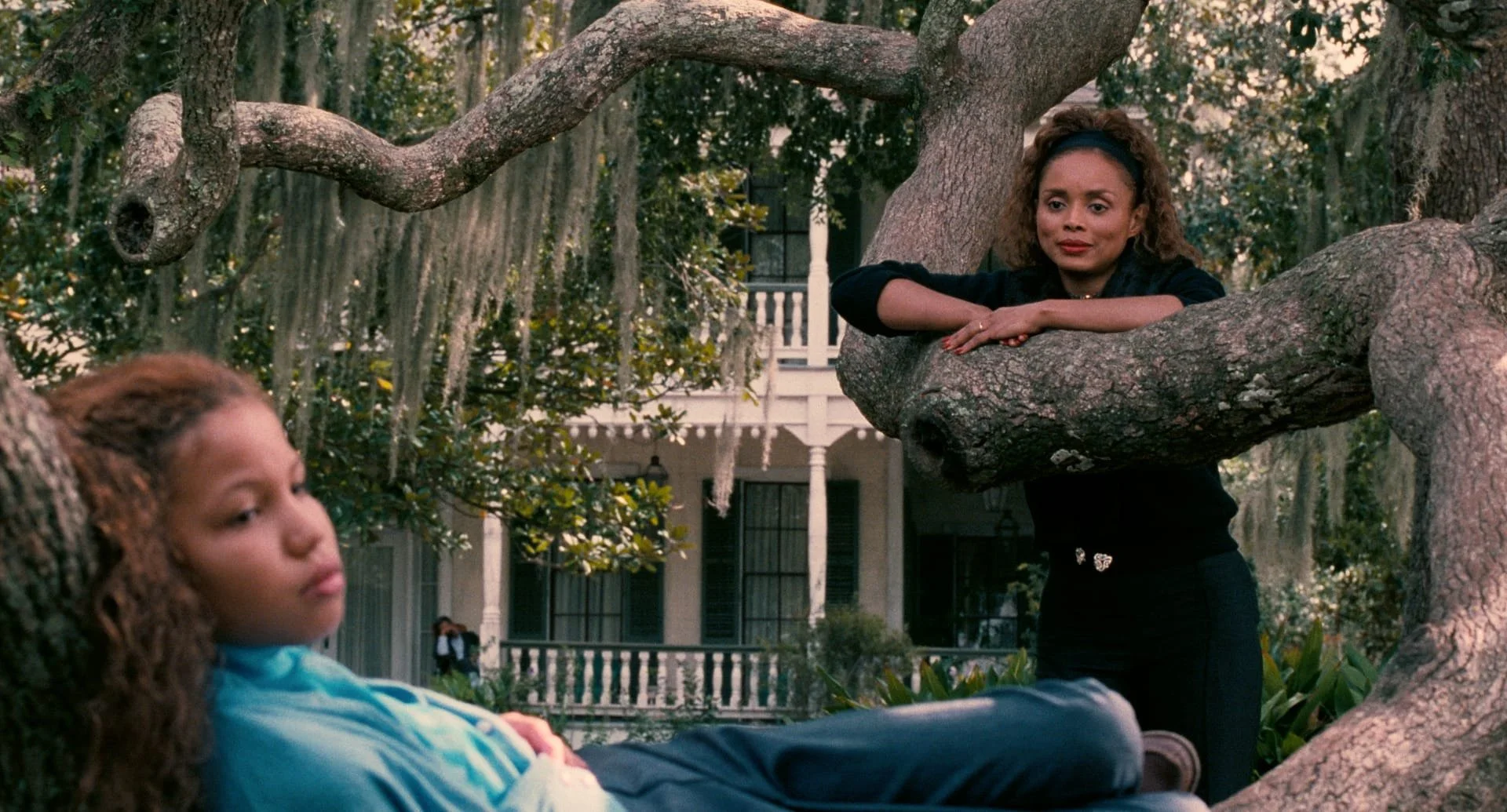
This is my favorite film on the list. Eve’s Bayou is one of those movies that grows with you. I first saw it as a kid on BET, not realizing how much of the film I hadn’t yet experienced to understand. Every rewatch reveals something new for me whether it was a look, a line, or even a small gesture that carried the weight of an entire family’s unspoken truth. Told through Eve’s fragmented recollections of her childhood in Louisiana, the film unfolds like memory itself: layered, unreliable, and haunted by what’s left unsaid.
Eve is an unreliable narrator, but that’s the beauty of it. The story explores how a child interprets adult failings as Eve witnesses betrayal and secrecy before she even has the words for them. Her father, played by Samuel L. Jackson, is the film’s tragic force—a man whose charm and infidelity quietly corrodes the family he’s built. His wife’s quiet unraveling becomes the cost of her silence, masking pain with grace in a society that already demands silence and understanding from women dealing with their husband’s discretions . Kasi Lemmons asks us to fill in the gaps, to question what’s real, and to sit with the discomfort of uncertainty. The story also navigates black women through trauma, legacy, and truth in the South without catering to or being filtered through the white gaze. Lemmons weaves Voodoo and hoodooism into the film’s DNA, presenting Black spirituality beyond the confines of the church, but rather something intimate, ancestral, and powerfully feminine.
What I love about Eve’s Bayou is how it reframes Southern Black life through the perspective of black womanhood. The story navigates through trauma, legacy, and truth in the South without catering to or being filtered through the white gaze. Lemmons weaves Voodoo and hoodooism into the film’s DNA, presenting Black spirituality beyond the confines of the church, but rather something intimate, ancestral, and powerfully feminine. It’s a film about inheritance, not just of blood; but of secrets, faith, and what it means to love someone who’s broken you. Every frame hums with Southern Gothic contradictions: truth and illusion, sin and salvation. It’s haunting, but it’s also deeply alive.
Sinners (2025) dir. Ryan Coogler
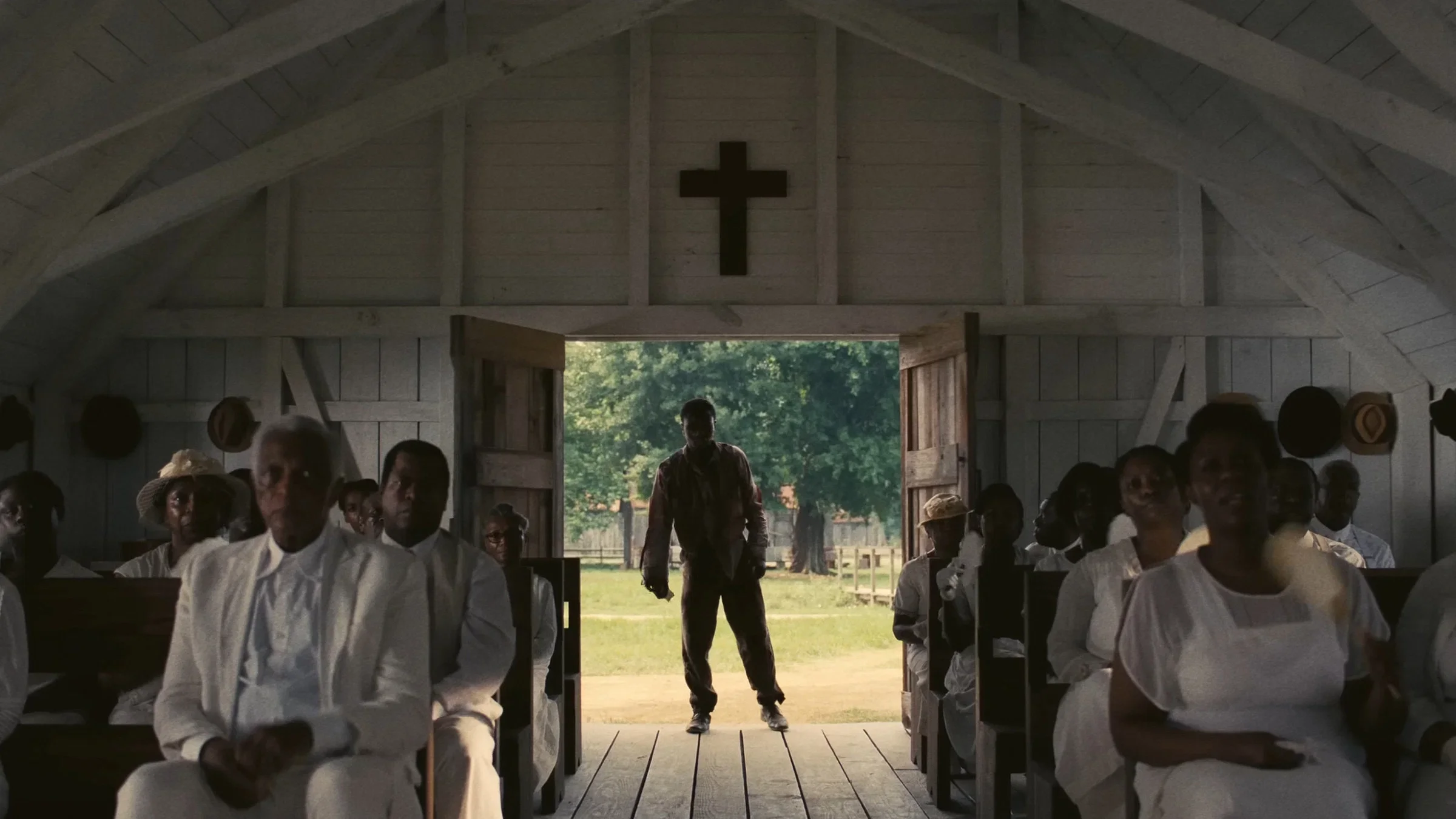
I’ve been in love with Ryan Coogler (both literally and figuratively) since his debut at 25 with Fruitvale Station (2013). Sinners feels like the first time we truly see Coogler take full creative control, telling a story entirely on his own terms while making history with Warner Brothers in his ownership deal. The film follows twin brothers Smoke and Stack as they return to Clarksdale, Mississippi, to turn an old sawmill into a Black juke joint. What begins as a story of ambition and defiance quickly spirals into horror when their younger cousin Sammie’s blues performance awakens something ancient; vampires drawn not just to blood, but to the spiritual essence of the music and culture is belongs to itself.
Set over the course of twenty-four hours, Sinners is soaked in a Southern Gothic atmosphere: sin, redemption, and survival all tangled up with the real weight of Southern racism. The vampires aren’t just monsters, they’re metaphors of colonialism, consuming not only bodies but culture, memory, and the power of expression. The head vampire in charge, Remmick, hungers more than blood; he wants Sammie’s gift, his rhythm, his connection to the ancestral sound of the blues. In this world, the fight isn’t only against racism, or death (whether it be the Klu Klux Klan or vampires), it’s for the preservation of identity and art. Coogler uses hoodoo, blues, and the Black church not as backdrops, but as spiritual weapons of survival.
The film’s most unforgettable scene comes when Sammie plays his guitar in the juke joint, summoning the past, present, and future through his song. The moment transcends horror—it becomes a meditation on liberation, where blues turns into a kind of salvation. That’s what makes Sammie’s rejection of the church so powerful, being that his father is a preacher who disapproves of blues music. He’s not turning away from God, but toward the truth of his own spirit. Sinners was always a doomed story—two Black men buying and owning a juke joint in Mississippi? It was never going to end well. Yet by the film’s close, you can’t help but agree with Stack and Sammie that it was the best night of their lives, because for one fleeting moment, “they were truly free.”
